A day in the life of a Hopewell Hospice Registered Nurse
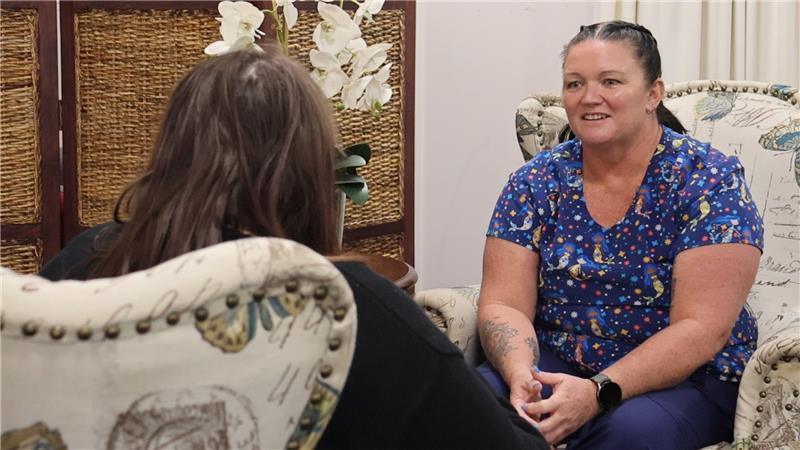
Working as a Registered Nurse (RN) in hospice care is unlike any other nursing role. It’s deeply emotional, profoundly rewarding, and requires a unique blend of compassion, flexibility, and resilience. At Hopewell Hospice, where every moment matters, our clinical nurse Kat has been walking alongside patients and families through their most vulnerable times for six years.
Read the story and watch the video below.
Meet Kat
Kat’s journey with Hopewell began during her postgraduate placement and blossomed into a six-year commitment to palliative care. When asked how she prepares mentally and emotionally for her shifts, Kat shares:
Mentally, I come in and I prepare myself for everything and anything. Emotionally, it depends on the day... You come in with a clear head, and you go with the flow.
This mindset is vital in hospice care, where no two days are the same. Kat describes a typical day as starting with thorough handovers, bedside checks, medication management, and, most importantly, spending meaningful time with patients and families.
“We don’t rush anyone. We don’t wake anyone. We work around them and make them feel comfortable and at home.”
Building connections beyond medical care
Hospice care is not just about managing symptoms; it’s about human connection. Kat uses her sense of humour as a bridge to ease patients through difficult moments: “I like to connect with people in a funny sort of way... It shouldn’t be all doom and gloom. It should be fun.”
She emphasises that emotional support is often what patients need most. Facing death is daunting, and Kat notes, “Emotionally, we provide a lot of support because ultimately, they’re dealing with death and dying. It’s a scary thing for most people.”
Why Kat chose hospice nursing
Kat’s dedication to palliative care was sparked early in her career. She recalls her first experience with death at age 19 in aged care: “I went home that night thinking that this surely isn’t how death has to be.” Since then, she has made it her mission to bring compassion to end-of-life care and deepen her expertise in this field.
Supporting families through anticipatory grief is also part of her role. Kat explains, “We spend time with them, break things down bit by bit... to make them feel like they’re doing the right thing.” The team at Hopewell works closely to provide not just guests, but also families, with the emotional care they need.
The hardest part: helping people let go
One of the biggest challenges hospice nurses face is helping patients and families come to terms with death.
We get a lot of patients and family members in denial. “It’s sitting with them, explaining and educating... being honest and open, but compassionate.
This emotional involvement is unavoidable. Kat admits, “You’re not human if you don’t get emotionally attached or involved.” She has cared for a wide range of patients, from a 19-year-old to a 102-year-old, and notes that each journey is unique.
Dispelling hospice misconceptions
Kat wants the community to understand that hospices are not just "death houses."
We make the hospice as homely as possible... We try to allow you to have independence and freedom within your last days, weeks, months of life.
This ethos is reflected in the care provided when someone is nearing the end of life at Hopewell. Families are included in conversations, rooms are made comfortable with personal touches like candles and soft lighting, and loved ones can stay overnight.
After passing, families are given as much time as they need with their loved ones, with a touching walk of honour farewell ritual to respect their journey.
The qualities needed for hospice nursing
What kind of person thrives in hospice nursing? Kat lists essential traits: “You need to be open minded, flexible, compassionate, empathetic, sympathetic, caring... and never take anything for granted.”
She describes the work as varied with some days being fast-paced and others involving quietly sitting and chatting with patients and families. The close-knit team at Hopewell supports each other through the emotional highs and lows. Kat encourages new nurses, “Please do not feel that you cannot talk to us about anything... we have seen it all, heard it all.”
Self-care in a demanding role
Caring for dying patients takes an emotional toll. Kat copes by allowing herself to grieve openly: “For me, I’m a bit of a crier, so I will have a little cry... The families get to know me quite well, and they confide in me.”
Her experience has also shaped her perspective on life and mortality. She embraces life fully and is open about her own end-of-life wishes, stating, “I accept death. I know it’s going to happen one day... and if I have my coworkers looking after me, I will have a good death.”
Continuous learning and growth
Hopewell Hospice values education and professional growth. Kat highlights opportunities to attend palliative care conferences and learn from both nursing and medical perspectives.
There are so many opportunities to further progress your career within palliative care.
If you are a nurse with a compassionate heart, an open mind, and a commitment to making a difference in people’s final days, Hopewell Hospice could be the place for you. As Kat puts it:
It’s hard and emotional, but we’re a very close-knit team... and we support each other.
Ready to learn more?
We’ve put together a “Day in the life” video where you can catch a glimpse of what Kat does firsthand.
Interested in a rewarding career in hospice nursing?
Visit our careers page to explore current opportunities and learn more.